Tree Roots in Your Sewer Line — Greer, SC
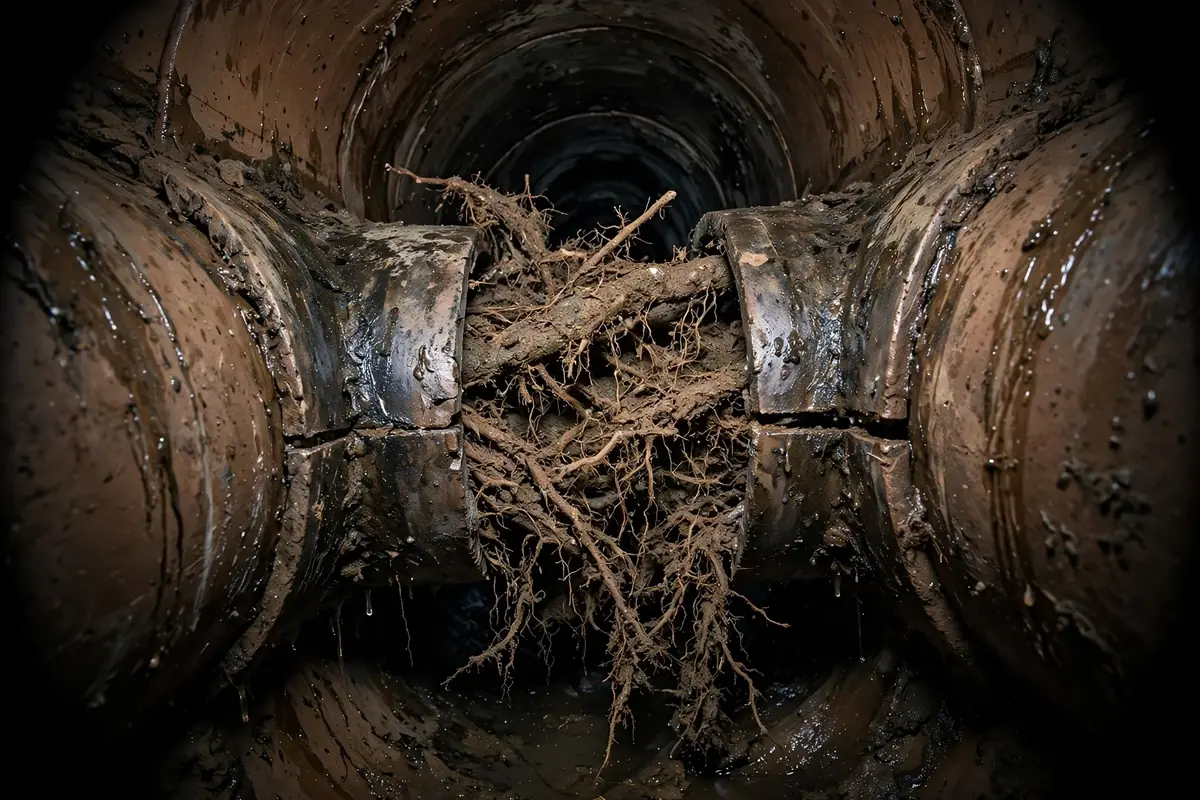
Short answer: roots get in at the joints. They don't need to break the pipe, just find an opening. Cutting or jetting them out restores flow but doesn't seal the joint, so they come back. The permanent fixes are structural: line the run to seal the joints, or replace the damaged section. A camera shows whether you're at the clearing stage or the fixing stage.
At a Glance
- Roots enter at the joints — they don't break in; they find the opening.
- Cutting or jetting restores flow but doesn't seal the joint, so the roots return.
- Permanent fixes are structural: lining to seal the joints, or replacing the damaged section.
- Older clay lines are the most vulnerable — joints every few feet.
Why Roots Invade Greer Sewer Lines
The cause is local. Greer's established neighborhoods — Sugar Creek, Silverleaf, the older streets around downtown — pair mature oak canopy with older jointed laterals (clay especially, with a joint every few feet). Roots hunt moisture, and a joint that seeps vapor is a beacon.
Meanwhile the red clay under those lots swells when wet and shrinks when dry, working the joints open a fraction at a time through about 50 inches of rain a year.
Tree + old joints + moving clay: that's the whole mechanism, and it's why roots are the #1 structural finding on Greer camera inspections.
Signs Roots Are in Your Line
- Clogs that return on a cycle — often the same season each year
- Slow drains and gurgling that cleaning fixes temporarily
- A backup after the line "was just cleaned" a few months ago
- A big tree standing roughly over the line's route to the street
Clearing Roots — What It Does and Doesn't Do
Mechanical cutting runs a blade through the line and chews the root mass out. Hydro jetting scours with high-pressure water and flushes the debris through. Both restore flow, and that's genuinely useful. Neither seals the joint.
Roots regrow through the same opening, because the opening and the moisture are still there. Clearing is maintenance, and honest maintenance has its place — just don't let anyone sell it to you as a repair.
The Permanent Fixes
- CIPP lining — a jointless new pipe inside the old one; along the lined run, there are no joints left to enter. The standard answer for root-invaded clay and cast iron that still holds its shape. Lining, in depth.
- Section replacement — where roots have cracked or offset the pipe itself, the damaged section comes out.
- Pipe bursting — a new, joint-tight HDPE line through the old path, for runs too damaged to line.
The Tree Question
Homeowners ask whether the tree has to go. Almost never as a first move. The tree is mature, it's shading the house, and in Sugar Creek it's half the street's character. Seal the pipe and the tree goes back to being scenery.
The exception — a tree physically crushing a line that can't be lined or rerouted — is decided on footage, not by default.
Roots on a cycle means the pipe is asking for a structural answer. Get the footage first. Call Greer Sewer Pros: +1 (864) 874-0043